Can AI Really Make Hiring Fairer? A Guide to Mitigating Bias in Skill Analysis
 Alita FernandesMarch 20, 20265 min read
You’re staring at a mountain of applications, and the pressure is on to find the perfect candidate—fast. AI-powered tools promise a shortcut, a way to instantly analyze skills, profile candidates, and surface the best talent. It sounds like a dream: objective, efficient, and data-driven.
But there’s a paradox at play. As researchers at MIT Sloan have noted, the very AI designed to eliminate human bias can sometimes amplify it on a massive scale. If an AI learns from historical hiring data that reflects past societal or organizational biases, it won’t fix them. It will automate them. This is the critical challenge every modern hiring team must understand.
What is Algorithmic Bias, Really?
Algorithmic bias isn’t about robots developing personal prejudices. It’s about math reflecting a flawed reality. When an AI system for skill analysis or candidate profiling shows bias, it’s typically rooted in one of three areas: the data it learns from, its own design, or how humans interpret its output.
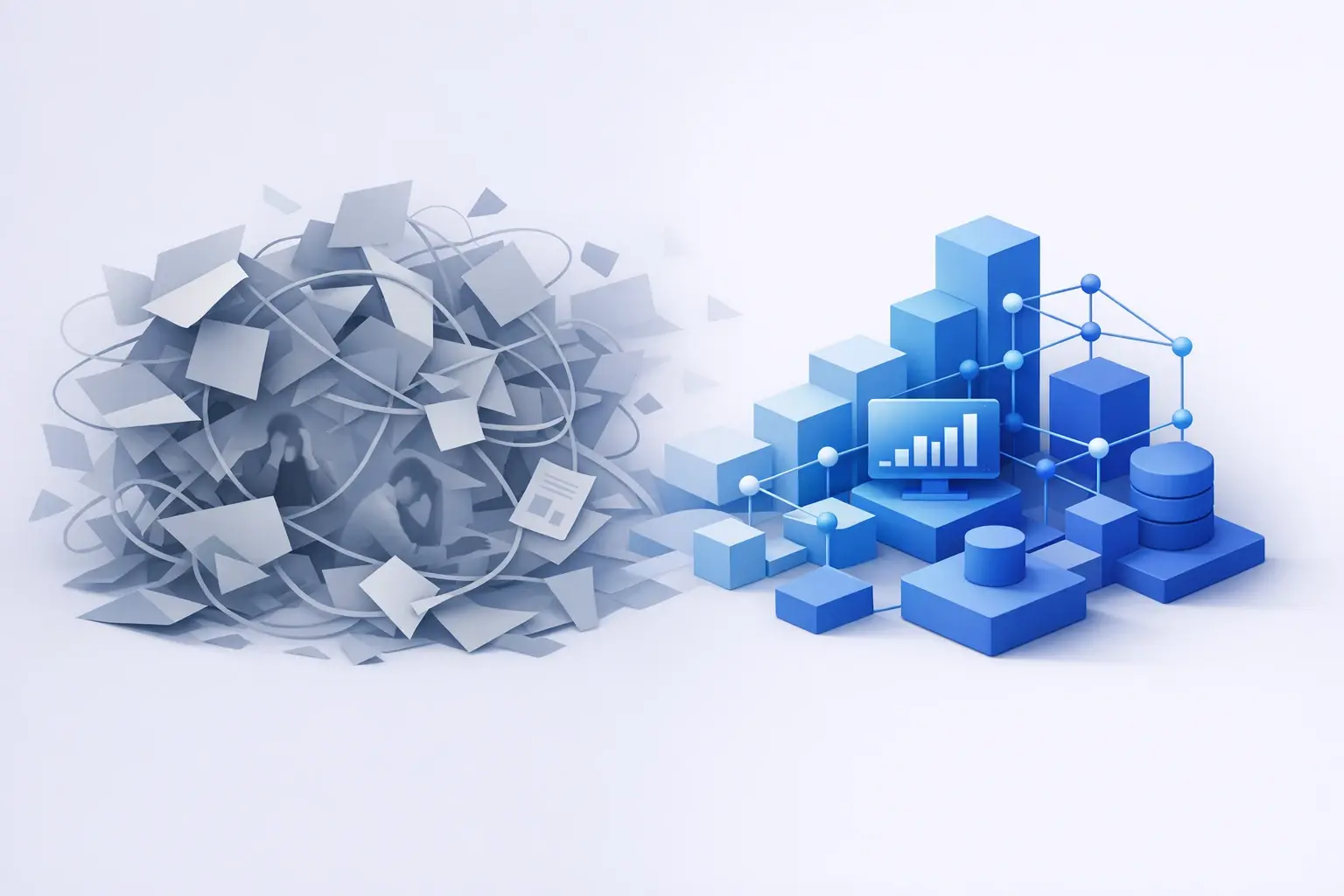
Illustrates the foundational types of algorithmic bias impacting AI-driven skill gap analysis and candidate profiling, clarifying their distinct roles and interconnections.
Think of it this way: if your past hiring practices favored candidates from certain universities or zip codes, an AI trained on that data might learn to associate those factors with success. It doesn’t know why—it only knows patterns. This is how proxy discrimination occurs, where seemingly neutral data points stand in for protected characteristics like race or socioeconomic status.
A famous real-world example is an Amazon hiring tool that was scrapped after it was found to penalize resumes containing the word “women’s” (as in “women’s chess club captain”). The model had learned from a decade of male-dominated tech resumes that men were preferable candidates. It wasn’t malicious; it was just reflecting the data it was given.
Building a Fairer System: Actionable Strategies for Mitigation
So, how do we harness the power of AI without inheriting the biases of the past? The solution isn’t to abandon technology, but to implement it thoughtfully with robust safeguards. A truly equitable AI hiring system is built on a foundation of intentional design and human oversight.
Depicts key strategies for mitigating bias in AI hiring systems, emphasizing integrated approaches from data to legal frameworks.
Here are the core principles in practice:
- Start with Diverse Data: The most crucial step is training AI models on large, diverse, and representative datasets. This means actively scrubbing data that could lead to proxy discrimination and ensuring the information reflects the talent pool you want to attract, not just the one you’ve hired from historically.
- Design for Fairness: Modern AI platforms can be designed with fairness metrics built in. These act as checks and balances, allowing developers to test if the model provides equitable recommendations across different demographic groups before it ever interacts with a real candidate.
- Keep a Human in the Loop: AI should be a powerful assistant, not the final decision-maker. The goal is to use AI to surface high-potential candidates based on skills and qualifications, allowing recruiters and hiring managers to apply their expertise and judgment where it matters most.
The Human Touch in an Automated World
Ultimately, the most effective approach combines the consistency and scale of AI with the nuanced understanding of a human expert. AI can screen thousands of candidates against a consistent, skills-based rubric far more reliably than humans can. This frees up your team from repetitive tasks to focus on engaging the best-fit talent.
Real-world depiction of HR professionals using AI tools for skill gap analysis and bias mitigation, highlighting human oversight and technology integration.
This partnership allows you to build a hiring process that is not only faster and more efficient but also fundamentally fairer.
Frequently Asked Questions
What is the main cause of AI bias in hiring?The primary cause is biased training data. If the historical data used to teach the AI reflects past human biases (conscious or unconscious), the AI will learn and replicate those biases in its analysis and recommendations.
Can AI ever be completely unbiased?Achieving zero bias is nearly impossible, as data will always reflect some aspects of the world it comes from. However, a well-designed AI system with technical safeguards, continuous monitoring, and human oversight can be significantly fairer and more consistent than human-only screening processes.
Isn’t using AI for hiring riskier than manual screening?Manual screening is highly susceptible to unconscious human biases that are inconsistent and hard to track. A properly audited AI system applies the same criteria to every single candidate, providing a level of standardization that reduces subjective bias. The risk lies not in using AI, but in using an AI that lacks robust, built-in safeguards for fairness.
The journey to equitable hiring is ongoing. By understanding both the potential and the pitfalls of AI, you can leverage it as a powerful tool to identify talent based on what truly matters: their skills, potential, and ability to succeed.