Beyond Time-to-Hire: How to Measure the Real ROI of Your Recruitment Infrastructure
 Alita FernandesMarch 30, 20264 min read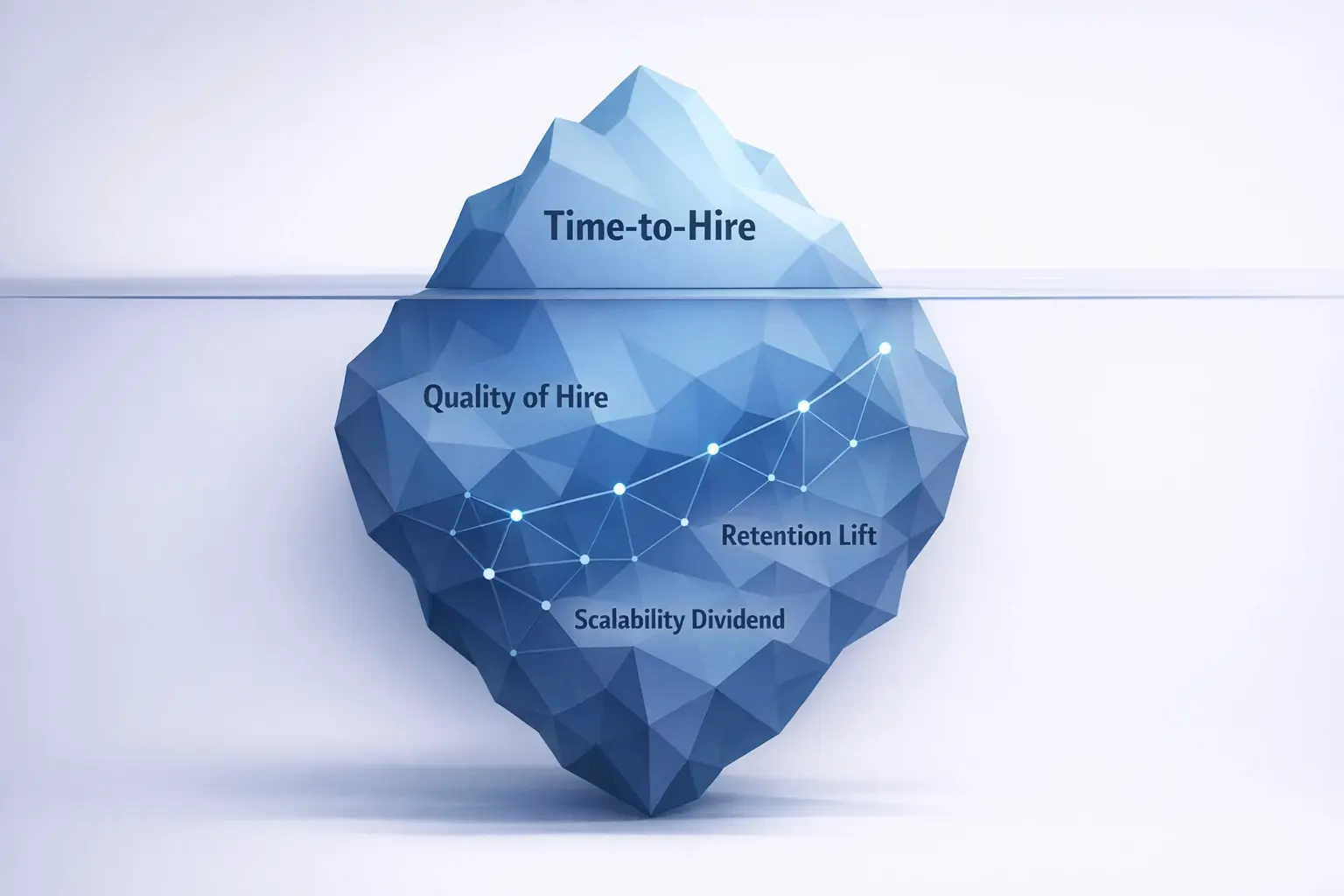
For years, HR leaders have been stuck in a frustrating cycle. You build strategic hiring plans, invest in technology, and champion candidate experience, but when it’s time to report to the C-suite, the conversation often shrinks to one metric: time-to-hire. While speed is important, focusing on it alone is like judging a chef solely on how quickly they can boil water. It misses the entire point—the quality of the meal.
This narrow view fails to capture the true financial impact of a robust hiring process. A truly scalable recruitment infrastructure does more than just fill seats faster; it builds a foundation for long-term business resilience and growth. The real question isn’t “How fast did we hire?” but “How much value did that hire bring?”
The Hidden Costs of a “Fast” Hire
Rushing to fill a role can lead to costly mistakes that ripple across the organization. A hire who isn’t a good fit can result in:
- Low Productivity: It takes longer for them to ramp up, dragging down team performance.
- High Turnover: According to SHRM, the cost of replacing an employee can be anywhere from one-half to two times their annual salary.
- Decreased Morale: A poor fit can disrupt team dynamics and increase the workload for others.
These are significant financial drains that a simple time-to-hire metric completely ignores. To justify strategic investments, you need a framework that tells the whole story.
Shifting to a Holistic ROI Framework
Measuring the true return on investment means looking at the entire talent lifecycle. Instead of just focusing on inputs (cost-per-hire) and speed (time-to-hire), a modern ROI model evaluates the long-term outputs of a quality hiring process. It connects recruitment efforts directly to business outcomes.
To do this, we need to embrace a new set of metrics that reflect the value a scalable infrastructure brings. While the specifics can vary, a powerful framework integrates both tangible costs and intangible benefits.
Key metrics to build into your model include:
- Quality of Hire (QoH): Combines performance review scores, manager satisfaction, and retention rates to assess the long-term success of a new employee.
- Time to Productivity: Measures how long it takes a new hire to become a fully contributing member of the team. A shorter ramp-up time means faster value creation.
- First-Year Attrition Rate: A high rate signals a mismatch in the hiring process. Reducing this directly saves on replacement costs.
- Hiring Manager Satisfaction: A satisfied manager indicates the process delivered a candidate who meets or exceeds their needs, reducing friction and improving collaboration.
By tracking these advanced metrics, you start painting a much richer picture of recruitment’s contribution.
From Metrics to Money: Speaking the C-Suite’s Language
The final step is translating these insights into the language of your executive team: financial impact. This is how you build a powerful business case for investment.
Connect your metrics to dollars and cents:
- Turnover: “By improving Quality of Hire by 15%, we reduced first-year attrition by 5%, saving the company $150,000 in replacement costs.”
- Productivity: “Our new onboarding process, supported by our hiring tech, has reduced Time to Productivity by 3 weeks, leading to an estimated $50,000 in additional revenue per sales hire in their first year.”
Presenting ROI this way elevates the conversation from HR being a cost center to a strategic driver of business value. It provides the financial proof needed for and securing the resources you need to build a world-class talent function.
Frequently Asked Questions
What is recruitment ROI, really?Recruitment ROI is a measure of the value generated by your hiring efforts compared to the costs invested. A comprehensive view moves beyond simple cost-per-hire to include the long-term value created by new employees, such as increased revenue, innovation, and retention.
Why is ‘quality of hire’ so hard to measure?It’s challenging because it’s a composite metric. It requires combining multiple data points—like performance ratings, manager feedback, and retention data—which often live in different systems. The key is to define a consistent formula and track it over time.
How can I start calculating a more comprehensive ROI?Start small. Pick one or two advanced metrics, like first-year attrition or hiring manager satisfaction. Establish a baseline, then track how new initiatives or technology impact those numbers. Even a small step provides a richer story than time-to-hire alone.
Moving beyond simplistic metrics is your first step toward building a truly strategic talent function. By measuring what matters, you can prove the immense value of investing in a scalable, high-quality recruitment infrastructure.